In 2011 I stepped off a plane onto the tarmac of the world’s longest runway. At the time, it was said that NASA could land a space shuttle either in Houston or in Doha – the latter of which was to become the capital of my new home. I remember panicking as I hopped onto an airport bus, because the heat, though extreme, was nothing compared to the brightness of the sky. Everything was white. I was about to pass out, though I know that staring at that silly long runway helped to calm me down. I found out much later that the length came about from an error between converting between metric and imperial systems, like the matter of Napoleon’s height, I suppose. It was ridiculous really. Later still, I found that the memory of that day, the newness and the excitement of it all, is now tied inexplicably to a film I watched over a decade later.
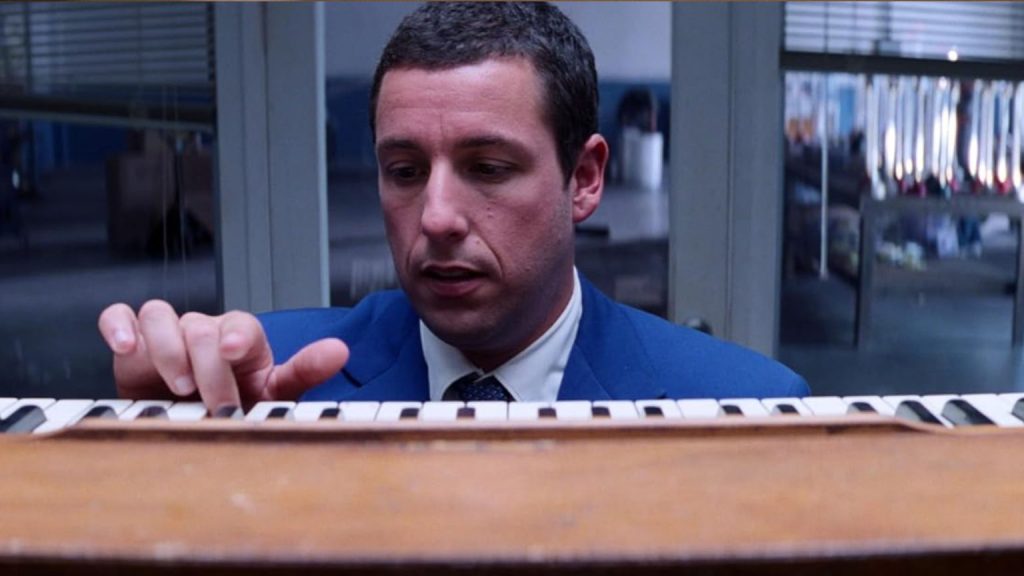
Jay-Ger, in their most recent essay on Pariah and Show Me Love, asked me whether humanity is best expressed in music or people. I think we can find at least part of an answer via the harmonium. According to Jon Brion, the film’s composer, it is a misconception that the harmonium we see in the film was used to compose the OST. In fact, the only time we actually hear the harmonium being played is when Barry Egan (Adam Sandler) tentatively flirts with its keys. And yet, the wheezing, airy nature of the soundtrack still captures the pneumatic feel of the instrument and indeed the deeply anxious, sometimes hyperventilating character who interacts with it. Music in Punch-Drunk Love is an expression of what Barry holds inside of himself and, when placed together, they present a colourful reality brimming with possibility. I think in that sense, my cop-out answer is that both the character and the music serve the audience, both mirror the possibility of being something more, even if that potential has been there all along.
When Jay-Ger and I first watched Punch-Drunk Love, I was gripped by the nervousness of its protagonist, the beauty of its colours, and, primarily, the brightness of its aspirations. This story looks to right wrongs and accept the fallibility we people must always contend with, and I felt, lying there on the sofa of our somewhat messy flat, that a movie had been made to settle the fears in ourselves – to remind us to breathe and laugh at our own ridiculousness. It remains one of my favourite movies because of this.
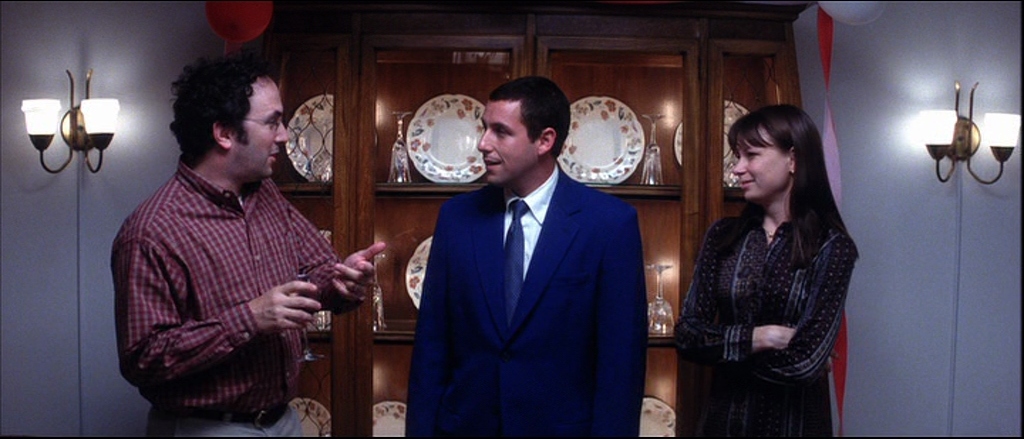
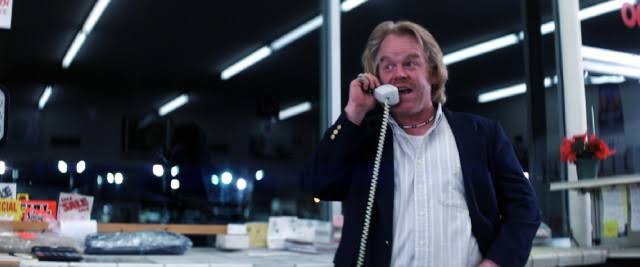
Mark Kermode is aware of the meta-ridiculousness of the film, commenting that ‘when Paul Thomas Anderson said he was making Punch-Drunk Love everyone thought at first it was a joke, because he had just made Magnolia and somebody said, “what are you doing next”, and he said “I’m gonna make an Adam Sandler comedy”’. Tonally, this film does feel miles away from PTA’s other films. There is, for the most part, very little dialogue, and the film focuses on a single protagonist and doesn’t dare to look too deeply into the lives of others. Lena (Emily Watson), the main catalyst for Barry’s changing perception of himself, is left largely alone, often being presented largely as she is. Her affection and gentle words complete the other side to Barry’s coin. On the other hand, for Mattress Man (Philip Seymour Hoffman) we see that he has a furious temper and an air of overconfidence. If Barry and Lena are a coin, then Mattress Man is a credit card. Throughout his humorous and serious trials, when Barry finally confronts his rival, he has accepted himself and gained his confidence. He recognises his own capacity to love and finally allows himself to accept his mistakes and take pride in his pudding coupon success. Marching around this world, Barry often grips onto things to settle his nerves, yet the phone he holds and seemingly continues to hold from California to Utah is only released after this confrontation/realisation in the mattress shop. He goes to Lena after, to be honest, and to try and do better.
When I got off that plane fifteen years ago, like poor Barry in Hawaii, it wasn’t a choice really – it was something that simply had to be done. And yet, despite any mistakes we make along the way, there is passion to be found in great change, in discomfort – love even. In Barry’s words: ‘I have so much strength in me you have no idea. I have a love in my life. It makes me stronger than anything you can imagine. I would say “that’s that”, Mattress Man’.
 What If Nobody's Home?