And I saw it coming, clouds bloodshot with the red
Of victory fires, the raw wound of that dawn
Igniting and erupting, bearing down
Like lava on a fleeing population.
From Seamus Heaney’s ‘Mycenae Lookout’.
~
On waking after seeing ‘The Odyssey’, I ambled through to my kitchen and prepared a stovetop, checking that the gas had ignited before tending to last night’s dishes. Waiting for the water to warm, I wondered if the boiler used gas or was electric, and looked around, seeing candles dotted about and a diffuser fuelled by a tealight. Beyond the incandescent, I wondered about the materiality of the rug, sofa, and of the faux-linoleum flooring.
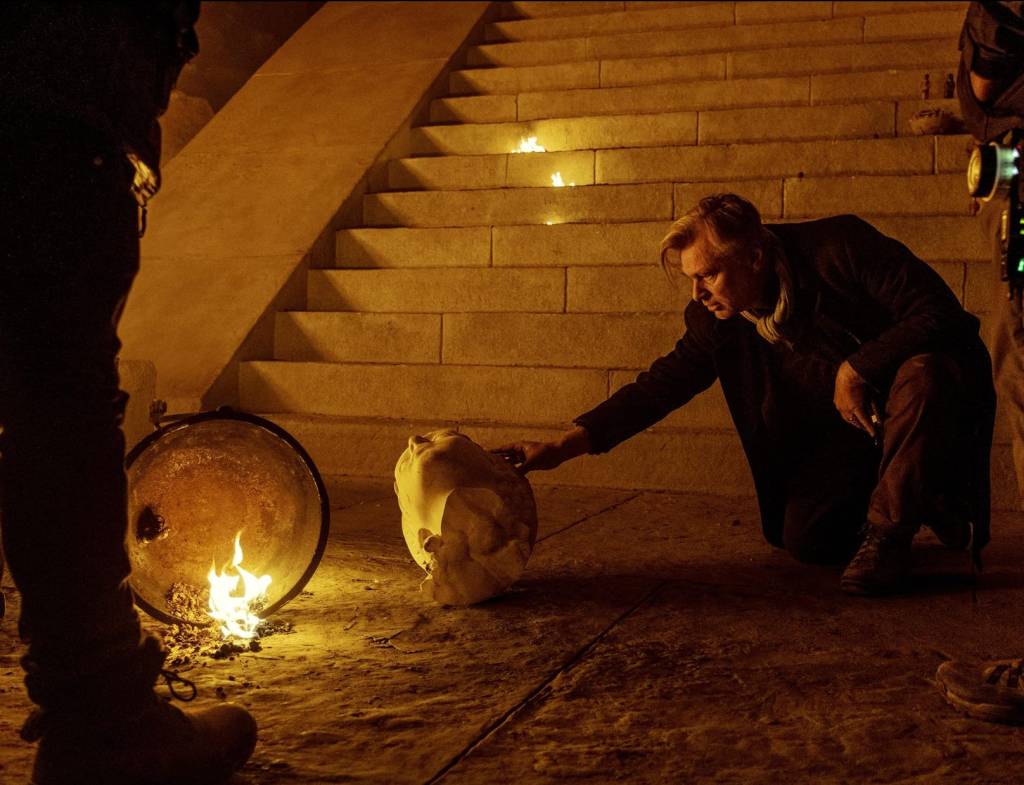
With reading John Vaillant’s ‘Fire Weather’ yesterday, before the film, I had watched Underwriters Laboratories’ 2009 experiment. It compares legacy furnishings – those not derived from petro-chemicals – with modern furnishings, and the speed with which a candle placed on the sofa in the respective rooms reached flashover, the point at which heated air in an enclosed area causes near spontaneous ignition across that space. If my Troy burnt tomorrow, how much time would I have?
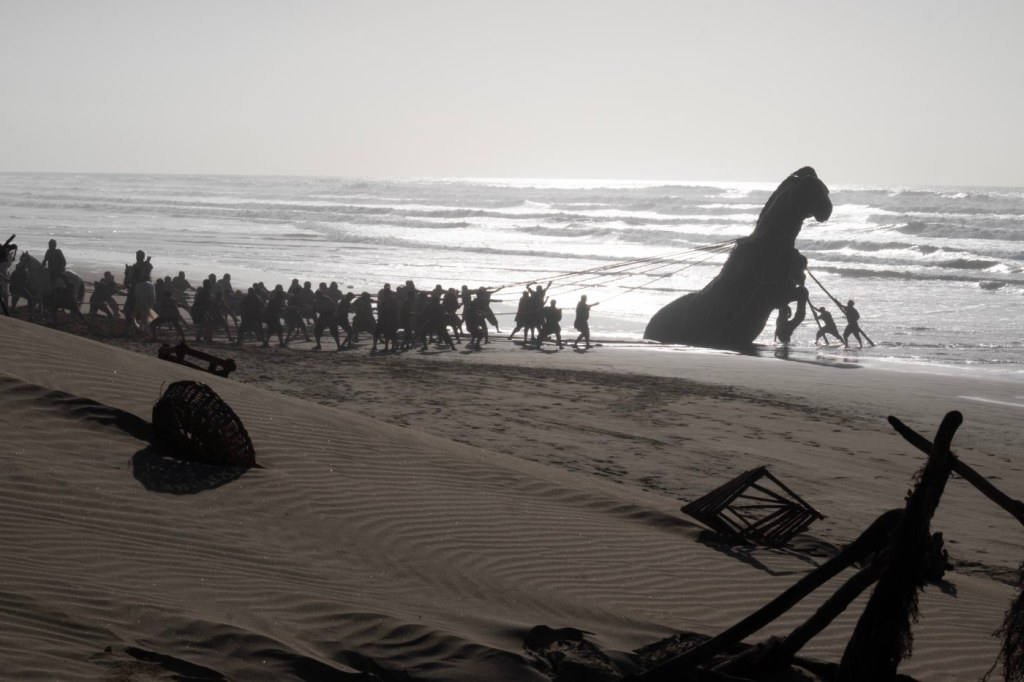
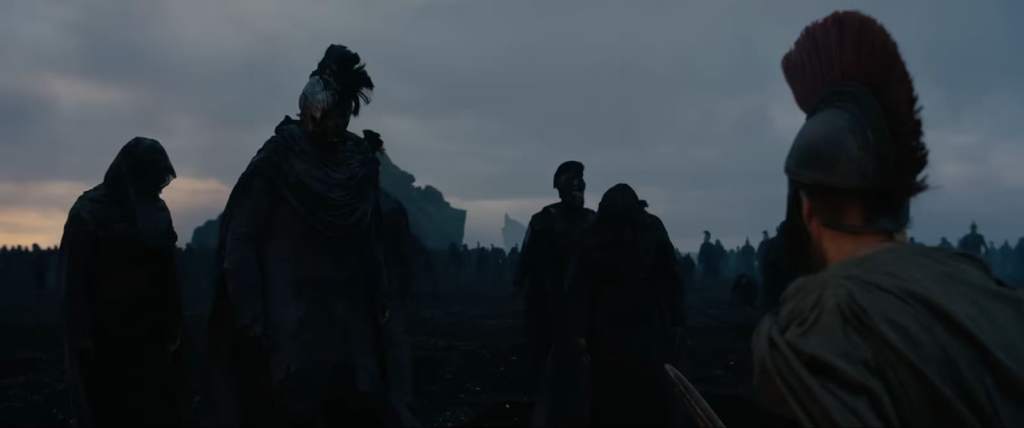
In Adam Tooze’s podcast on ‘The Odyssey’, he talks about the Late Bronze Age Collapse, where between 1200s and mid 1100 BC, there was a civilisational shift away from the more centralised, palace cultures represented by the Achaeans and the Trojans in the poem, towards the fragmented social formations of the early Greek Iron age. Tooze’s materialist analysis frames Homer’s epic as looking back, not just at the disaster of the Trojan war, but at civilisations that were on the cusp.
Time moves in a peculiar way, but this is history: things unfolding gradually across the intersecting horizons of landscape and time until the moment when, with astonishing suddenness, they merge and the event is upon you. Ten years waiting outside the walls of Troy, before one terrible night. You wonder where all the time has gone, when in fact it hasn’t gone anywhere, it is the events within it that appear to amplify in speed and scale – because they now include you. Factors attributed to the Late Bronze Age Collapse include climate change, earthquakes and internal unrest, events which can remain an abstraction, yet when they are upon you, time and circumstance achieve a kind of singularity and, suddenly nothing else exists; its immediacy – its presence – is overwhelming.
Jay-Ger considers a couple of takes on the bildungsroman, along with poetic and punk ways of being.
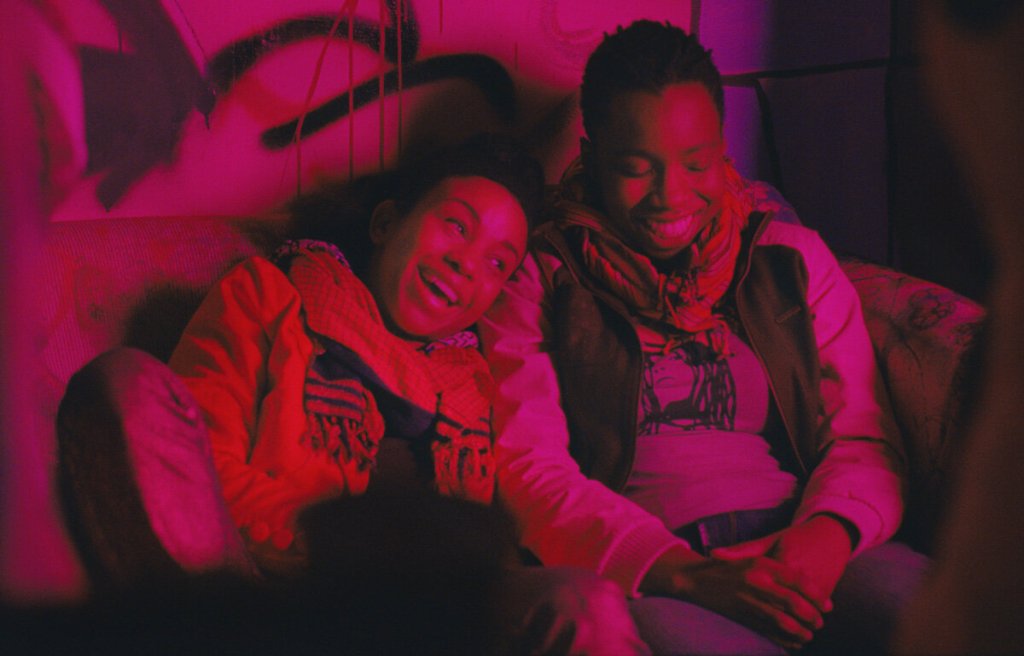
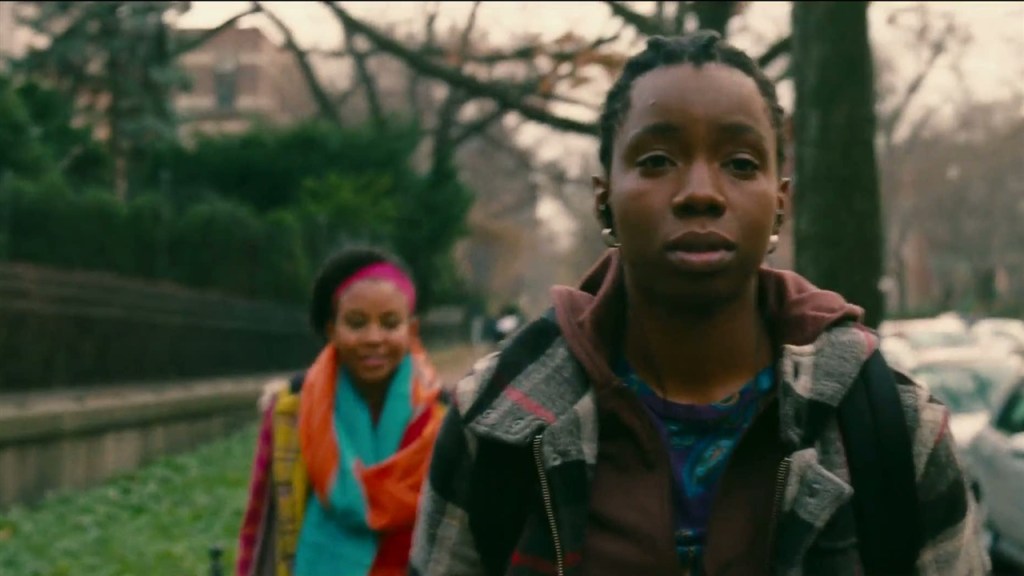
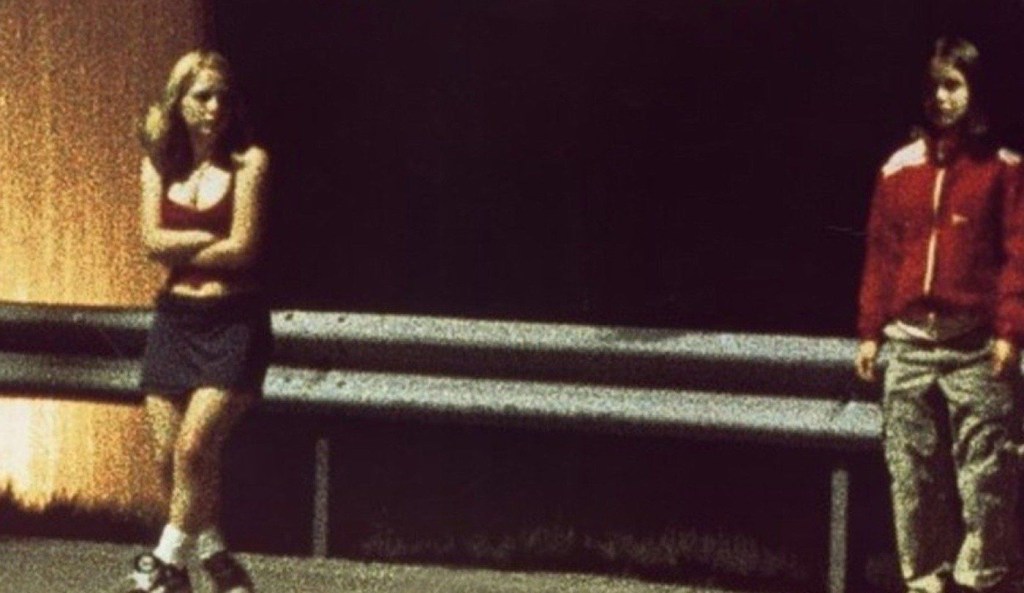
Following my last essay, I thought I would indulge in memories of teenagehood in a slightly different way; a couple of versions of bildungsroman. ‘Pariah’, directed by Dee Rees, centres around seventeen year-old Alike, growing up in inner-city Brooklyn. It has a social realist tone with slight poetic flourishes, such as the soundtrack and Alike’s own spoken-word pieces; similar films might include ‘Moonlight’ and ‘Fish Tank’. In contrast, Lukas Moodysson’s ‘Show Me Love’ is somewhat more tonally punk, capturing the more ferocious energy and village angst of the slightly younger Elin and Agnes. While both contain coming-of-age and coming-out, in ‘Show Me Love’ the characters seem to break through a certain barrier; meanwhile for Alike the breaking is ontologically posited – the closing poem contains the repeated lines: “I am broken, I am open”, following, “See the love shine through my cracks? See the light shine out through me?”. Alike (and the film’s) sensitivity towards words is perhaps what makes it unique; the associated movie posters, for example, tend to display its title as broken too, into syllables. Meanwhile, Moodysson’s film is arguably more sensitive towards music; or at least the relatively fast-paced rhythms of yearned-for city life. I was initially thinking of just writing about ‘Pariah’, being one of the movies I associate most with purple, but after reading Tom’s writing about ‘Manhunter’ I thought including the Swedish film would make a nice comparison piece.
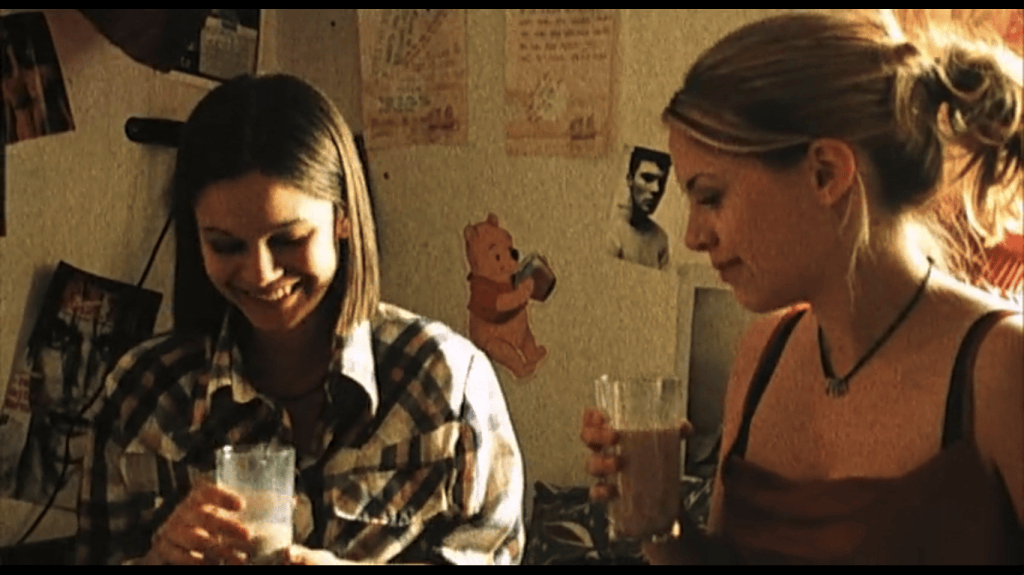
‘Show Me Love’ ends in quite a light way for a movie which grapples with some serious themes (somewhat like ‘Manhunter’), almost coming off as a rom-com by the end. After clumsily but quite beautifully coming out to their whole school, Elin and Agnes have a mundane kind of conversation about chocolate milk. I love this scene because while the film could have ended in a more “happily ever after” sort of way, the conversation glimpses a kind of everyday curiosity and being-with this likely entails; what you (Tom) said about ‘Manhunter’ reminded me of that, even if it wasn’t the intention. So… I’ll play with your question!
The short and boring answer is obviously that I think the way in which a film’s soundtrack matters is context dependent. At least, soundtracks often allow a glimpse into subjective feeling. This seems quite clearly the case in ‘Show Me Love’, where the consistent punk represents a kind of existential angst and rebellion against the apparent constraints of peripheral village life (the Swedish title, “Fucking Amal” – Amal being the village, captures this better than the English one). The love shared by Elin and Agnes is very much intermixed with this feeling – assuming as I do that the film’s main “subject” is the couple and emotional bonds between them rather than either of the girls individually. On the other hand, I think the soundtrack in Rees’ film is less important, partly because the subjective feeling of the film is expressed more genuinely in Alike’s poetry. A lot of the music in ‘Pariah’ is non-digetic, capturing something about her environment, meanwhile the relative silence of the mise-en-scence in ‘Show Me Love’ tells its own story; the social realist tone of ‘Pariah’ reflects a sense of absence that Alike assumingly positions as the melancholic core from which she creates poetry: in this case a lack of music resonates with subjective feeling.
Funnily enough, the major element I left out of my reflection on ‘It’s Such a Beautiful Day’ was indeed the soundtrack, which is quite powerful – mostly containing sweeping romantic-classical compositions from Bedrich Smetana to Georges Bizet, with the occasional Celtic folk piece. I think, in a strange way, these pieces may also be best understood as related to subjective feeling; although there is a sense of harmonice mundi in Hertzfeldt’s movie which is not quite so present in Rees’ or Moodysson’s. My sense is that I don’t need to enjoy a soundtrack to enjoy a movie; but that’s also entangled with the extent to which the film’s meaning is centred around music – or, perhaps even more radically, the film is musical in form.
One of my favourite examples of this latter kind of movie are the early films of Gregg Araki, particularly the “Teenage Apocalypse” trilogy; which at one point I decided to think of as “ontological shoegaze”. In, for example, ‘Nowhere’, there is a kind of absurd or dream logic which does not suggest a human subject to me (as with ‘It’s Such a Beautiful Day’), but rather a kind of big, monstrous, surreal, queer, and indeed soft and pillowy being. I was not sure what to call this entity, but it gave me the same sense as shoegaze so I decided the subjective logic of the movie was connectable through this kind of feeling; called the resultant imagined object “ontological shoegaze” (ridiculously), and decided to move on. In this case, quite literally, I cannot understand the film without its associated music; and the more shoegaze is played throughout, the easier it becomes for me to make sense of and immediately enjoy. Here, it is even possible that subjective feeling isn’t even important: there is something which “goes beyond” that – with shoegaze pretty much being a hyperobject in Timothy Morton’s sense; at least in relation to the film.
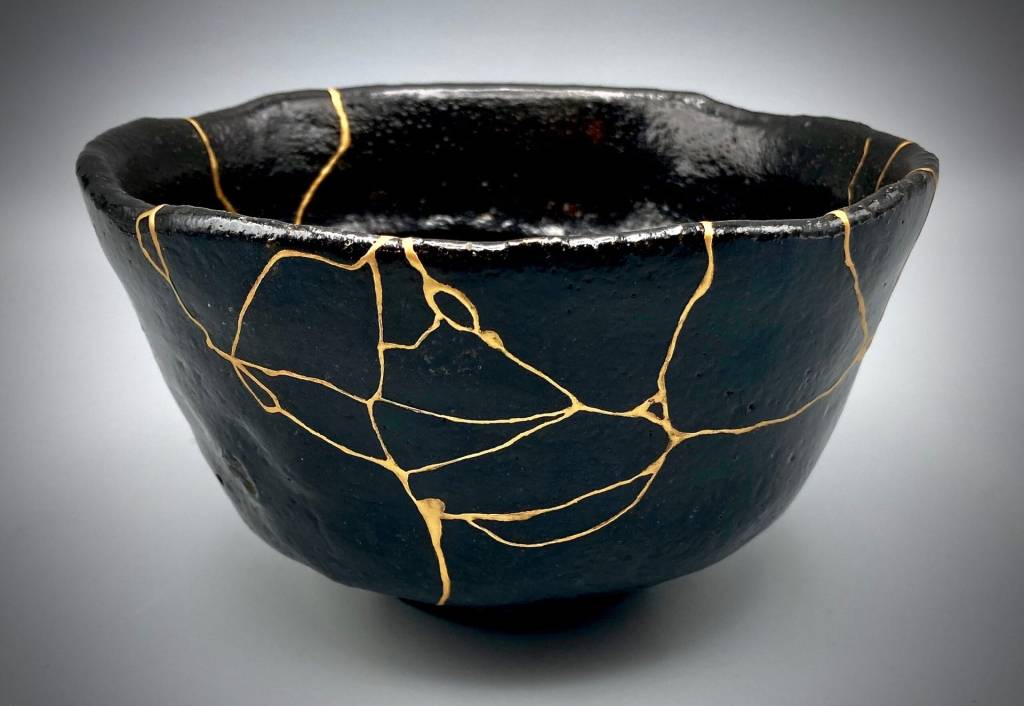
I’ll insert my own questions for you (Tom) at this point. Do you find the mirror more usually in a film’s music, or its characters? Also, do you think humanity is best expressed in music or people? In the meantime, let’s return to the themes of brokenness and openness. For Melanie Klein, maturity often involves acceptance of the self as it really is. People live in a state of attachment to loved ones, and how they act towards them changes what their loved ones mean to them; in this sense action creates cracks of meaning which it’s the self’s responsibility to resolve or repair. I like to think of the self, in this model, as analogous to a teacup in the Japanese art of kintsugi – perfectly-imperfect, composed of cracks yet being a complete object. From a subject-oriented perspective, the light of love shines out from within; through the cracks much like Alike describes. Openness to action and in this sense new bonds of love are preconditioned by brokenness; for Klein therefore, guilt toward one’s brokenness is among the fundamentals.
At the same time, Alike’s sense of existential responsibility for her parent’s traumas and prejudice – motivating her to leave her “fish bowl” surroundings and take a new perspective on it, are psychodynamically very moving. Often, reparation in a Kleinian sense is not only a lifelong commitment but must be projected past one’s own being. For Alike, art and particularly poetry allow for this long-term projective identification. It’s moving to me because it glimpses what Klein calls the depressive position, which for her is a sign of maturity; immaturity involves “manic reparation”, where the subject attempts to resolve their relationships too quickly – Alike’s commitment to the art life seems congruent with what for her is an appropriate rhythm of the reparative process. It’s worth saying that, for Klein, people tend to fall out of the depressive position throughout life and thus are motivated to work back to it. Along these lines, I am slightly suspicious of coming-of-age as a genre: since it seems too often to focus on the transition from teenage to adult years. That being said, the psychodynamics involved in both ‘Pariah’ and ‘Show Me Love’ feel quite real to me.
This is partly why I adore the ending of ‘Show Me Love’, as to me it implies the reconciliation of Elin and Agnes with Amal – their small-town environment. There is no punk apparent; in fact the following credits are paired with a much more “girly” pop track. In my reading, punk allows the girls to connect with a sense of being responsible in breaking or destruction. If both Elin and Agnes are like kintsugi teacups, their light shines through the cracks and attaches to punk as a loved object; this shared love is arguably fundamental to the girl’s relationship. Nonetheless, as a punk track plays over their coming-out scene, we transition into the aforementioned scene of everyday life. What is the meaning of choccy milk? Perhaps, here, it can be said that shared love of choccy milk has the potential to form a new basis of relationality between the girls. Punk, in this sense, is for them what Jacques Lacan calls the “passage to the act” – a medium for which the process of reparation can be completed and a new bond of love formed. The final scene is noteworthy for its sense of accomplishment but also ambivalence and ambiguity. There is no real guarantee that Elin and Agnes will find a new shared thing to love. Realistically, chocolate milk stands for the potential of anything in particular to provide this basis; meaning it is probably my favourite kind of object, that of a kind of unrecognised potential. For a moment, the girls see punk as it is (or was), to them. Because of its role as a passage to the act, I think ‘Show Me Love’ also becomes much less enjoyable without its propulsive soundtrack.
I’ll wrap up with an unfortunately abridged version of personal reflections because, again, I’ve droned on too long. There are aspects of all three – Alike, Elin, and Agnes – which I see parts of myself in. When it comes to Elin and Agnes, I relate to the feeling of wanting to leave my small town environment and finding music as a kind of imaginative way to do that (temporarily). My memory of those years strikes me as slightly more along the lines of Alike’s though, and my instinct is that ‘Pariah’ is a marginally better film. It’s a sad film, because ultimately I think it’s largely grappling with multifaceted intergenerational trauma; but it does so in a way which feels honest, mature, and patient. These aspects of myself are somewhat buried in characters like Alike, Elin, and Agnes (overlapping with queer characters more generally); and, honestly, I’m kind of okay with that – the past is the past, even if it’s good to take out and look at every now and then.
The signifier “teenage pariah” can do a lot of work to contain these; and I suppose writing this has helped me realise why I often describe myself that way. Both films are a little under the radar, but in my view are worth a watch. They handle bildungsroman well in their respective ways, showing the variation of rhythms and trajectories we are on in this life. Music (or lack of it), plays an important role in creating a synchronous emotional landscape; although I think both movies make sense without it. For Elin and Agnes, punk style, attitude, and more are accentuated by the soundtrack; but my sense is they would still go down the passage if it were slightly differently shaped. For Alike, there seems to be a need to focus on words; perhaps with the more obviously rhythmic aspects of existence becoming significant later in life. For me, music can often carry a film; however, in most instances its elements could also have been held otherwise.

 What If Nobody's Home?