
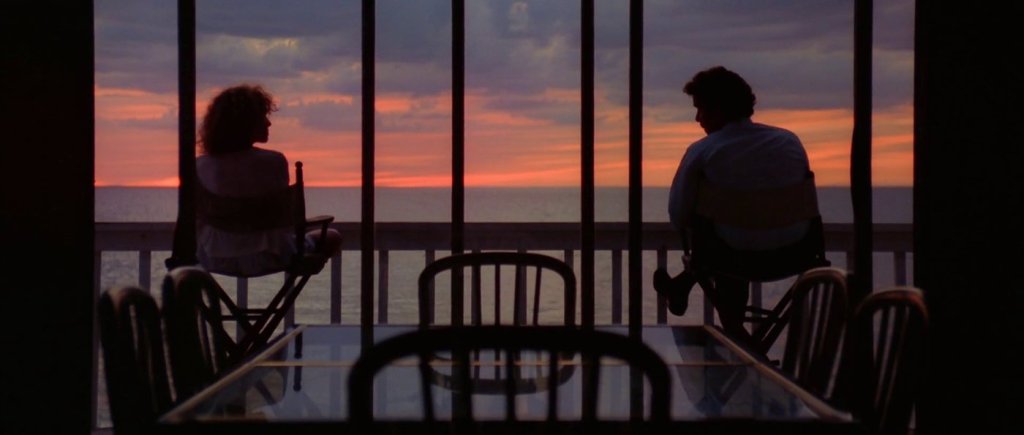
Tom thinks about sympathy and sunsets in ‘Manhunter’.
The opening of ‘Manhunter’ is one drowning in nostalgia; a burning sun collapsing under the weight of a difficult proposition conjures a feeling familiar to many of us, and so, we begin in the in-between, at the crepuscular and fleeting bridge between light and dark; good and bad; clear and obscure. Although the view of a sinking sun is, arguably, a slightly cliché image for film, it remains universally emotive and distinctly natural, or distinctly human. The cinematographer, Dante Spinotti (a name destined for art), captures the sunset as an amalgamation between narrative expectation and spiritual empathetic (or perhaps sympathetic) sense. I love this scene because of what we expect to see and feel: a choice within a temporal suspension – as found in ‘Days of Heaven’ or ‘Paris, Texas’. And yet, Spinotti shows that time is certainly not suspended here. Within the first ten minutes we see and hear the dread of the opening attack, while the sun sinks further and further away. The plot too, like the closing day, moves quickly. We have met our protagonists on a clear bright beach and, when a decision is made, the sun sets. Darkness is the realm of this film. Pathetic fallacies are often found in the brooding teenager listening to their indie music on a rainy day, yet for Will Graham (William Petersen) the sun falls loudly away when his peace is broken. For most of us, the rain is a suitable pathetic fallacy – sadness, cold, blue and so on. For Will, it is the celestial, the spiritual, the passionate and, ultimately, the violent and destructive which fits his mould.
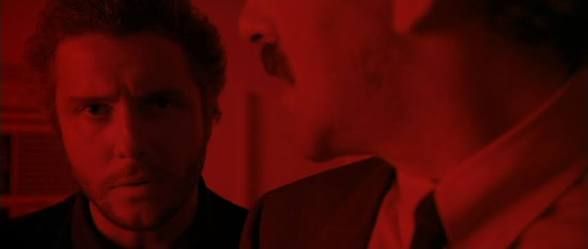
The sun and its positioning form an interesting recurring motif, where the film is bookmarked by sunsets. By framing the narrative structure in this way, the ending creates a sense of ambiguity as the darkness of the credits rolls in. Will the night bring back more murder and ultraviolence? Is there another, impending horror for Will and his family to experience, or is it that the horror just continues, but without these characters experiencing it? Interestingly, or comparatively, the ending presents an earlier or younger sunset, not quite at its end – we do not get to see what follows it. Hence, could it be something as meta as the darkness of the credits, the rows and rows of cast and crew spread out like a casualty list in some horrible disaster? I think fans of the book will find joy in this final interpretation.
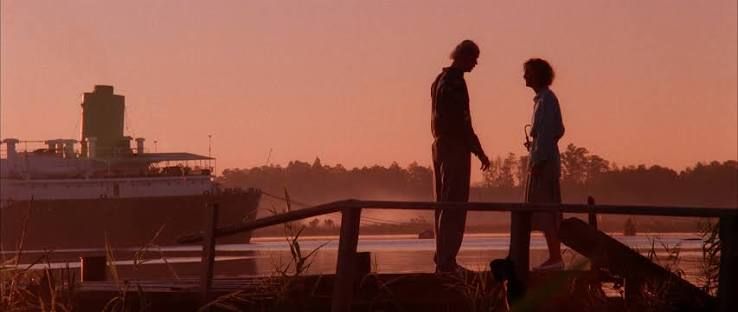
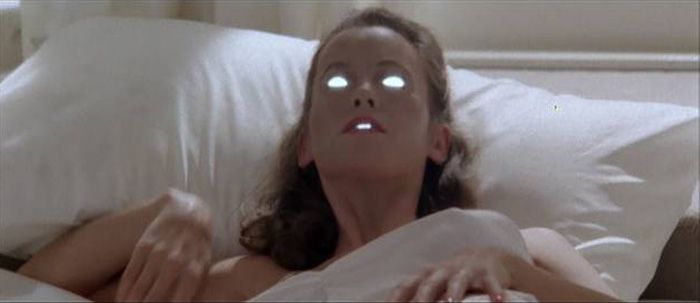
At the focal point of the film, there is a notable inversion of the sunset, where the Tooth Fairy, Francis Dollarhyde (Tom Noonan), embraces Reba McClane (Joan Allen) at daybreak. This is, without a doubt, one of the more tender and heartfelt moments of the film – if such adjectives can be used to describe the core of such a violent story. Watching this scene, I felt an intense sense of sympathy for these two characters, where Reba’s physical blindness seems to mirror the spiritual blindness of Francis. In this moment of profound beauty and, in a slightly bizarre sense, intense passion, we are reminded that neither one can see the sun.
I think that this is the moment I was drawn to most. When Jay-Ger and I thought about starting this project, I wanted us to focus on discussing the elements of film which most interest us. For Jay-Ger, particularly in his latest essay on ‘It’s Such a Beautiful Day’, his approach is rooted more in the interpretation of the medium – and all the various philosophical and artistic methods of interpretation which come with that. I think, or guess, that I am interested in the humanity in film. That’s not to say it’s about finding the humanity in film, but rather finding the mirror in film. Within all of us is the ability to empathise and the ability to sympathise with – or scorn – humanity. There is evil everywhere; there is good everywhere and, for me, I enjoy film because it often illuminates the crepuscular and murky in-between, and the people or characters who often inhabit these spaces.
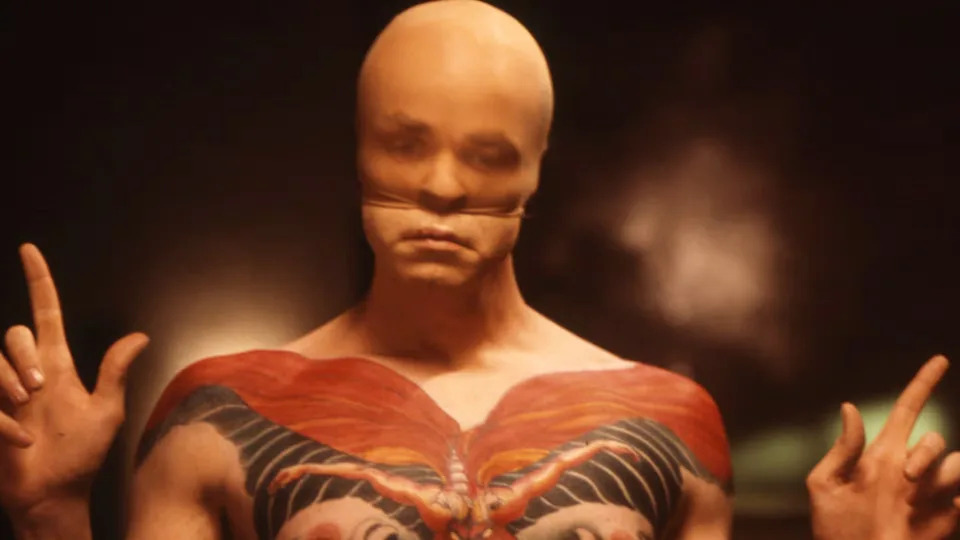
The genius of this film, if I’m being hyperbolic, lies within how the protagonist responds to the villain. For Will Graham, as indeed was the fashion in the early days of the FBI’s behavioural science unit, empathy, sympathy, etc. are all tools for understanding, predicting and capturing these “serial killers”. He is the embodiment of destructive empathy and represents an extreme example of the sheep in wolf’s clothing. For the killer, Will admits that he feels sympathy, but he is careful to note the paradoxical nature of his stance. He says to his superior, Jack Crawford (Dennis Farina), “My heart bleeds for him, as a child. Someone took a kid and manufactured a monster. At the same time, as an adult, he’s irredeemable. He butchers whole families to pursue trivial fantasies. As an adult, someone should blow the sick fuck out of his socks. Do you think that’s a contradiction?”
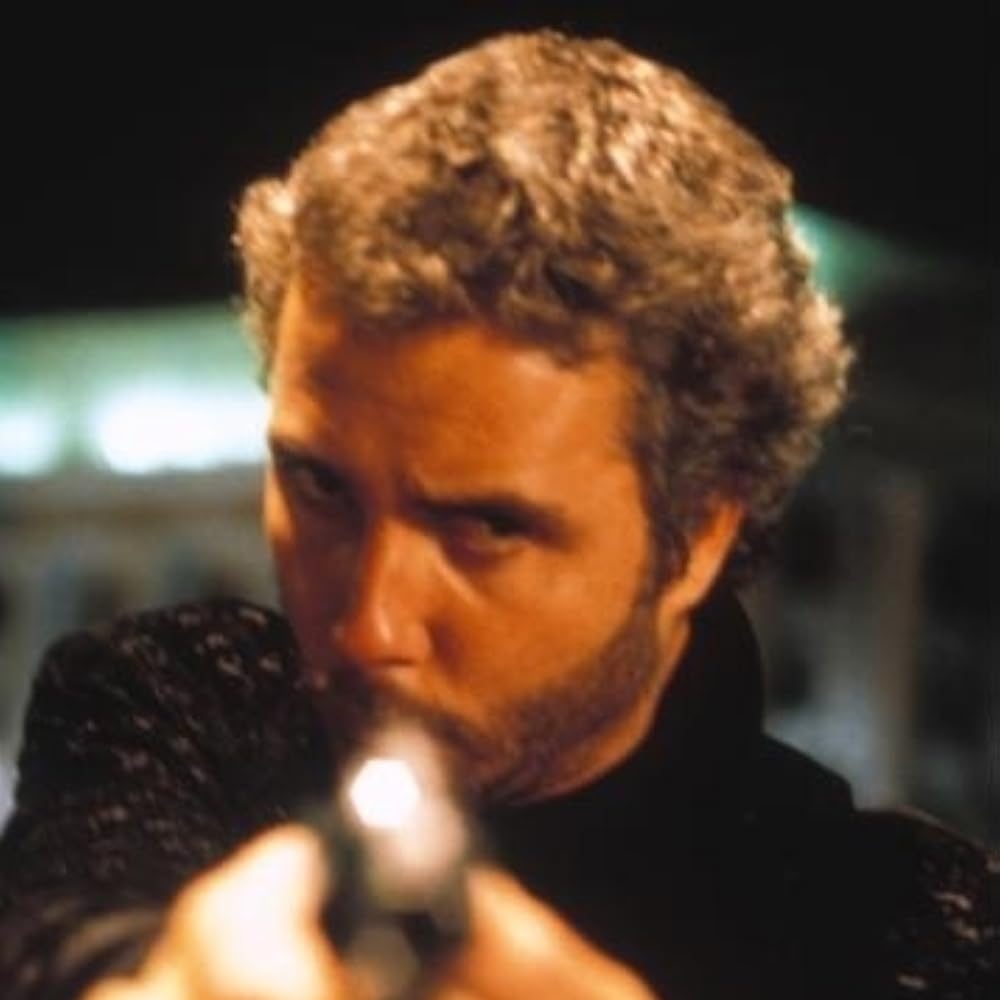
I believe that this is, in some sense, a contradiction – if not a full-blown paradox. One could just as easily attach the ‘Killing Baby Hitler’ thought experiment to Will’s argument and enjoy the lengthy debates which will likely spawn. This, however, does not interest me. What interests me is how Will recognises that he must mirror evil to find it. Throughout the film we are led to believe that Will toes the line, that he is mere moments away from becoming the evil he is trying to prevent. Yet, the film never really commits to this bit, as, even as a psychological mirror to Francis, the actions or methods of the two deviate when it matters: there are organised and disorganised killers; the Tooth Fairy is the former. Will, in a moment of immense tension, seems to almost consider allowing the murder to go ahead, before literally jumping through the pane with which he watches, empathises and sympathises with the killer. This disorganised stunt detaches him from the mind of the murderer, who, terrifyingly, manages to draw out a shotgun, kill the lights and murder several police officers within moments. He was clearly prepared, while Will almost certainly was not. In these moments, Will is the still of a setting sun – frozen in the in-between and never quite ready to set fully.
When we begin to understand the psychological dangers of Will’s pursuit, it is in a conversation with his son, Kevin (David Seaman). His son is probably not much older than an actual tooth-fairy believer when he ponders the dangers of his father’s profession. The scene is mundane, moving along the aisle of a store, and yet, for all the intensity of its other more famous scenes, this scene is the centre of Will’s narrative. On the one hand, we have Francis enjoying the blind passions under a burning sun; for Will, it is all reality – under the harsh lights of a shop. His son asks honest questions and receives honest answers; ultimately, after listening intently, he asks “What sort of coffee do you like?” It’s a beautiful question.
I think I’ll end this with a question of my own, to my friend and colleague. Jay-Ger, the one thing I did not particularly enjoy about this film was the soundtrack… Is a soundtrack essential to a film?
 What If Nobody's Home?
Leave a comment