
Tom questions the endings of recent horror films.
Let me pre-empt this by saying I am a fan of both Zach Cregger’s work and video games more generally. On a scale of one to desperately contacting a priest, Cregger’s Barbarian falls somewhere far from one. It was freaky, it was fun, and yes, admittedly, I was a bit scared watching it. Many video games have affected me similarly, Dead Space in particular… however, my understanding of the terror associated with the Resident Evil games is much more limited. I have a vague recollection of playing Resident Evil 4 as a kid – a game often touted as one of the greatest in its genre – but really, I think my juvenility and, more importantly, the age of the game being played led to it feeling ultimately forgettable. Its polygonal form felt old and far removed from my modern gaming experience, and while Cregger’s Resident Evil certainly does not feel old, something does feel missing.
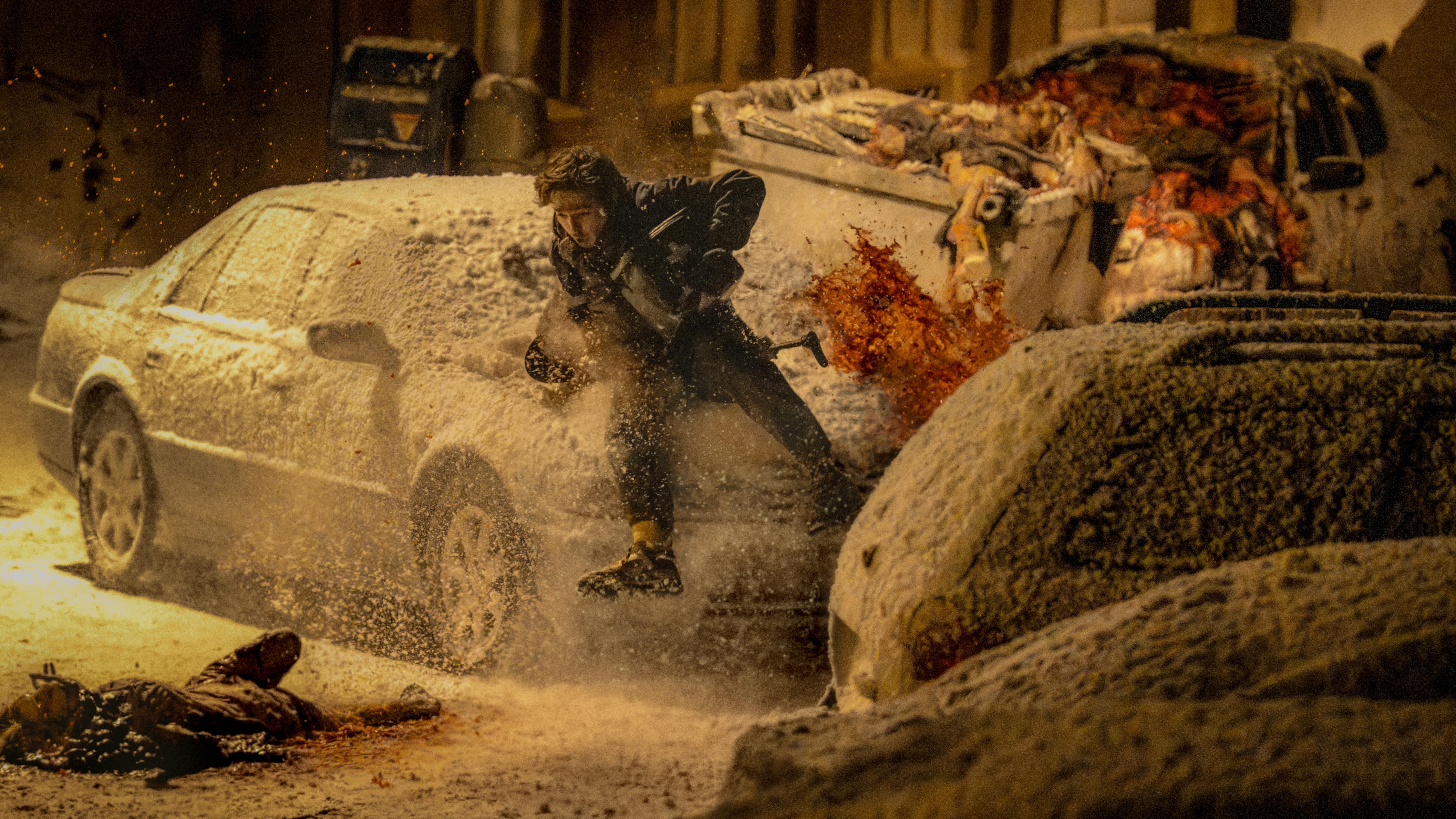
One of the achievements of this film, like Weapons, is its balance between humour and horror. I’d bet that you’d be hard-pressed to find anyone who doesn’t at least smile while Bryan (Austin Abrams) is chased by the undead around an upturned police cruiser. The ‘Jumping Scene’ and Bryan’s brilliant reactions had me convulsing with giggles. These moments are, of course, hilarious and slapstick, but ultimately their tone characterises the nature of horror in 2026. It is finally fun again.

I think it is fair to say the film community has been feeling exhausted by the horror genre. The likes of the Insidious or Conjuring franchises, which I didn’t even know were different, contribute to this feeling via weak jump scares and regurgitated characters. If you watch one, you have seen them all – think marvel for gore. I heard the critic Chris Ryan describe the state of horror on a recent podcast as just sad – these films are just overflowing with sadness. I think that Horror has been lacking an awareness of its own effect, that is, to entertain through terror.
Terror, to a gaming child with wotsit fingers and play-placid adults alike, is a sensation adjacent to humour – why do we so often laugh when we are scared? This is what Cregger does so well: he finds the humour in the terror and by embracing the two, a story becomes something that exists purely to be enjoyed. The reality of horror, whether supernatural or otherwise, is that it is often strange and bizarre, and Cregger’s films, like some other recent horror films, are showing an awareness of its effects. For example, there is something really funny about an undead woman chasing a squeaky young man around a car in the middle of nowhere.

So, long pre-empt over, why did I not like this movie?
Resident Evil is undeniably a fun watch and, despite any qualms viewers may have, it feels as close to a video game narrative as possible. The constantly changing weapons become increasingly ludicrous, the transitions between areas offer moments of reprieve akin to save points, and pivotally, our affection towards the central character only grows. For the side characters, save perhaps the unseen Michelle, we feel next to nothing, and simply want our character, who in a video game sense would be ourselves also, to succeed. Isn’t that a nice thought? That perhaps the success of this movie lies in our own relatability to the character? Well, where this film fails is in its inability to capitalise on this dynamic. More specifically, the film ends with prolonged and unsatisfying tragedy. Even more specifically, this film ends with the hint of future instalments – as if our investment in the character was simply the key to a whole bigger world, one coming to you soon via Sony Pictures, to suck dry everything that made this film fun. Call me a pessimist, but the last five minutes of this movie, and the threat of another horror franchise, frustrated me so much that it spoiled my entire understanding of the film.
Now, comparison, as T.S. Eliot once said, is the chief tool of the critic, and so if we consider the other two biggest horror films of the year, Kane Parson’s creepypasta (what the hell does that even mean) Backrooms and Curry Barker’s Obsession, in conjunction with Resident Evil, we should be able to get to the bottom of this conundrum. And really, it is a conundrum, as all are certainly good films, but I only really ‘loved’ Obsession. They all play with conventions of horror and provide something refreshing for a franchise-tired genre. On the one hand, Backrooms looks at an interesting subject and utilises extreme ambiguity and, ultimately, the viewer’s imagination to conjure its sickly feel. On the other hand, Obsession modernises the monkey’s paw trope by framing it in the desires of a toxic young man, whose carelessness and ‘nice guy’ energy led to the deaths of all of his closest friends. And yet, for these two movies, only Backrooms felt like it had a ‘The Avengers will return’ style ending. With Obsession, its ending, like so many of the great horror classics, produces both a neat resolution and an indication of continuing horror for one or all of the characters. Resident Evil falls in the Backrooms camp.

Now, maybe I just hate the whole zoom in thing at the end of Resident Evil – the most Marvel moment by far – but either way, this film really just lacks the satisfaction of an actual ending. It feels like an introduction and not a neat, nor complete story, and it left me rolling my eyes at the thought of another horror franchise – doomed to fall further and further into tired tropes and tawdriness. Comparatively, where Obsession succeeds, the other two fail: the ending is complete and does not feel like someone (or some corporation) tugging you in on a fishing hook.
All said and done, I think Resident Evil is still worth seeing. It’s a fun ride and if, like me, you enjoyed the thrills of video games in your youth – it feels somehow nostalgic and new all at once. It certainly balances humour and horror too, but its ending, and the promise of another franchise, left me frustrated, sick and tired.
Leave a Reply